 WESolutions


Applying for a UK Dependent Visa can be an emotional step for a family, as it is important. This visa allows eligible partners, spouses, and children to join a family member living in the UK on a qualifying visa, such as a Skilled Worker visa or other qualifying work routes. In some limited cases, Student visa holders may also bring dependants, subject to specific eligibility criteria. In this step-by-step guide, we walk you through who can apply, what documents are needed, how to complete the application process for 2026, common reasons for refusal, and key FAQs. By following the correct procedure and providing complete information, you can significantly improve your chances of success.
Who Can Apply for a UK Dependent Visa?
A UK dependent visa is available to family members of individuals who hold a UK visa that permits dependents, such as the Skilled Worker visa or certain other work routes. In general terms, dependents include:
- A spouse or civil partner
- An unmarried partner, if you have been living together for at least two years
- Your child – under the age of 18
- In some specific cases, children over 18 may extend their visa if they were previously granted permission as a dependant and remain financially and emotionally dependent on the sponsor.
Dependents must apply either from outside the UK to enter the country or inside the UK to extend or switch their existing permission. Each family member usually needs to make a separate application and pay the associated visa fee.
UK Dependent Visa Requirements 2026
It is important to understand the eligibility criteria and documentation you will need to submit before making the application to make sure you don’t miss any evidence.
Key Eligibility Conditions
To qualify for a UK Dependent Visa in 2026:
- You must be related to the sponsor (spouse, partner, child)
- You must prove your relationship is genuine and ongoing
- You must show that you (and your family, where relevant) can support yourselves financially without recourse to public funds
- The sponsor must meet a minimum financial requirement, usually through income or savings evidence
- You must provide a valid passport and identity documents
1. Identity and Relationship Proof
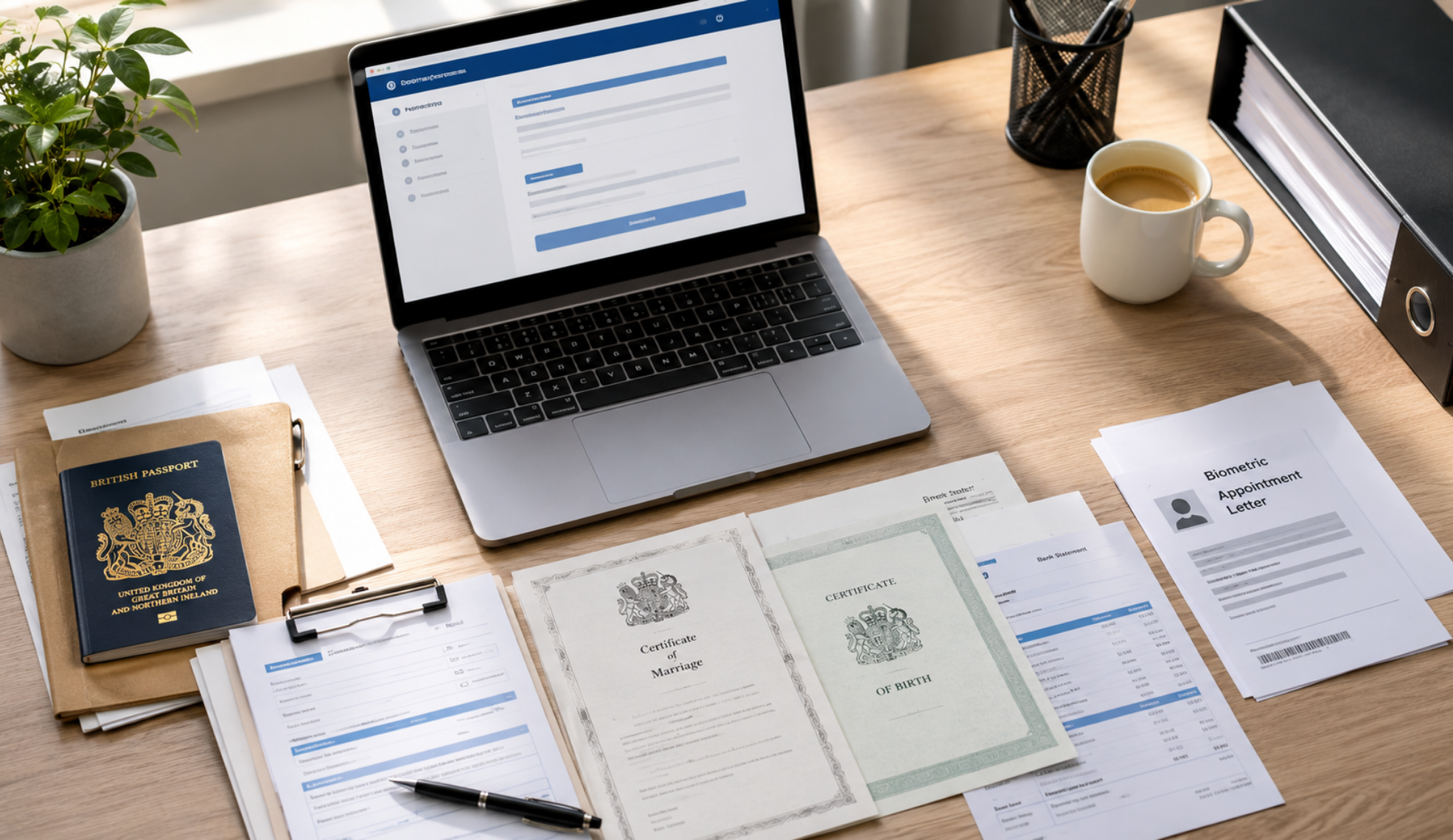
Dependents must provide clear evidence of their identity and family relationships. This usually includes:
- A valid passport or travel document
- Marriage certificate (for partners/spouses)
- Birth certificates (for children)
- Proof of living together or joint household evidence for partners
- Evidence of a genuine relationship (photos, correspondence, joint bills, tenancy agreements, etc.)
2. Financial Evidence
Even though the rules may vary by visa type, financial evidence typically shows:
- Bank statements covering a consecutive 28-day period ending no more than 31 days before the application date (where maintenance funds are required), authorising your ability to support yourself
- Proof of the sponsor’s income and funds
- Maintenance funds, if required by the specific visa category
3. Other Supporting Documents
Other documents that may be necessary include:
- Tuberculosis (TB) test results, where required by nationality
- a criminal record certificate – if you’re working in certain jobs
- Sponsor’s visa or immigration status documentation
- Proof of suitable accommodation in the UK
How to Apply for a UK Dependent Visa: Step-by-Step Process (2026)
Step 1: Check Which Form You Need
The first step is to identify the correct online application form for your dependent category. Partners and children each complete the relevant form, following guidance from the official GOV.UK portal, and selecting “dependent visa” as the visa type.
Step 2: Create a UKVI Account
The application needs to be submitted online on the portal provided by the Home Office. You or your representative must create a UK Visas and Immigration (UKVI) account. This is where you will find the relevant form and complete the application, upload documents, and pay the application fees.
Step 3: Prepare Your Documents
Check the list provided on the GOV.UK guide and gather all required documents before you start the application. This includes passports, relationship evidence, accommodation evidence, financial proof, TB/other medical test results (if needed), and any additional supporting documents. It’s better to get any non-English documents translated into English by a certified translator to ensure all documents are clear and legible.
Step 4: Complete the Online Application
The first step is to fill out the visa form completely and accurately. Mistakes and omissions in the visa form are a common reason for the disapproval of your application. Ensure that you fill each section with the right info, tick every applicable checkbox and don’t leave blank fields.
Step 5: Pay the Visa Fee and Immigration Health Surcharge
Pay the visa application charge and the Immigration Health Surcharge (IHS). The IHS is mandatory for most long-term visas and grants access to the National Health Service (NHS) during your stay.
Step 6: Biometric Appointment
After submitting the online form, you will be instructed to attend a biometric appointment at a visa application centre. Here you will provide fingerprints and a photograph. Applicants inside the UK may be able to use the UK Immigration’s ID Check App to verify their biometrics.
Step 7: Wait for Decision
Dependent visa decisions are usually issued within a few weeks. For applications made from outside the UK, this is typically around three weeks after the biometric appointment. You can pay an additional fee to get priority or super-priority services to get a faster decision.
Common Reasons for UK Dependent Visa Refusals
Even when you’re extremely careful with your applications, you may get refused. Know the most common mistakes people make to avoid them and have a robust application:
1. Missing or Incomplete Documents
One of the most common and frequent reasons for visa disapproval is failing to submit proper documents. People often fail to comply with the required paperwork, resulting in incomplete evidence. It’s best to have a clear checklist and gather and double-check the documents before submission.
2. Inadequate Financial Proof
If the applicant or sponsor fails to show sufficient funds or properly evidence income, the application may be refused. Be sure to include salary slips, bank statements and any supporting letters that show your financial solvency as per the required threshold.
3. Weak Relationship Evidence
For partner and spouse visas, failing to prove a genuine and continuous relationship is a common reason for refusal. Include robust and varied evidence to demonstrate ongoing life together.
4. Application Errors
Simple mistakes such as inaccurate answers, mislabelled documents, or not including translations to non-English documents can lead to rejection. Completing forms carefully, accurately and using professional help, such as provided by WESolutions, where necessary, would reduce this risk.
FAQs
1. How long does a UK Dependent Visa last?
The length of a dependent visa usually mirrors the sponsor’s visa. If your partner’s visa runs for a specific period, your dependent visa will likely end on the same date. Renewals can be made before expiry.
2. Can dependents apply from inside the UK?
Yes. If the dependent is already in the UK on an eligible visa, they can apply to extend or switch to a UK Dependent Visa from inside the UK. However, this depends on their current visa type and eligibility.
3. What happens if a dependent visa is refused?
If your dependent visa is refused, you may be able to reapply or submit an administrative review or appeal in some cases. Seek advice quickly if you receive a refusal to understand your options.
4. Can dependents switch to another visa category later?
In many cases, dependents can switch to another visa route, such as a work or student visa, provided they meet the eligibility criteria for that route at the time of application.
5. Can children go to school in the UK on a Dependent Visa?
Yes. Children granted a UK Dependent Visa are usually permitted to attend school without additional study permission, subject to local education rules.
6. Can a dependent apply for Indefinite Leave to Remain (ILR)?
If the dependent has been living in the UK for a qualifying period, usually a specified number of years (5/10) on a valid dependent status or another qualifying visa, they may apply for Indefinite Leave to Remain (ILR) if the eligibility criteria are met.
Start Your UK Dependent Visa Application with WESolutions
Applying for a UK Dependent Visa is a process that requires concentrating on details. Complying with all the necessary requirements and getting everything ready to submit could take time, but robust preparation will make a difference. At WESolutions, we guide you through all the steps from checking the eligibility to compiling all the documents in the right format and helping you submit your application so that you can be confident that your application was done correctly. Our visa and immigration specialists help reduce delays so you have the maximum chance of getting an approval.
Visit the UK Dependent Visa page to begin your application journey with expert support.